





 Need help?
How to Store Your BBQ in Winter

The BBQ gets a lot of use through spring and summer. When the season ends, what you do with it matters. A grill left outside uncleaned and uncovered over a British winter will rust, seize up, and need a serious overhaul before it’s fit to cook on again. A grill stored properly takes 20 minutes to prepare and comes out of winter in exactly the condition it went in.
This guide walks through everything: how to clean before storage, what to do with gas and charcoal grills specifically, where to store the BBQ, how to protect it if it stays outside, and what to check before the first cook of the new season.
Why winter storage matters
The main enemy is moisture. Rain, frost, condensation, and damp air all accelerate rust on metal components, particularly grates, burners, and the body of the BBQ. Grease left on cooking surfaces over winter attracts pests, grows mould, and bakes onto the surface in a way that’s much harder to remove in spring than it would have been in October.
A BBQ that isn’t stored properly doesn’t just need a clean when the weather improves – it may need replacement parts, or replacement entirely. Fifteen to twenty minutes at the end of the season is a worthwhile investment.
How to store a BBQ for winter: step by step
This applies to any BBQ – gas, charcoal, or electric. There are additional steps for gas BBQs below.
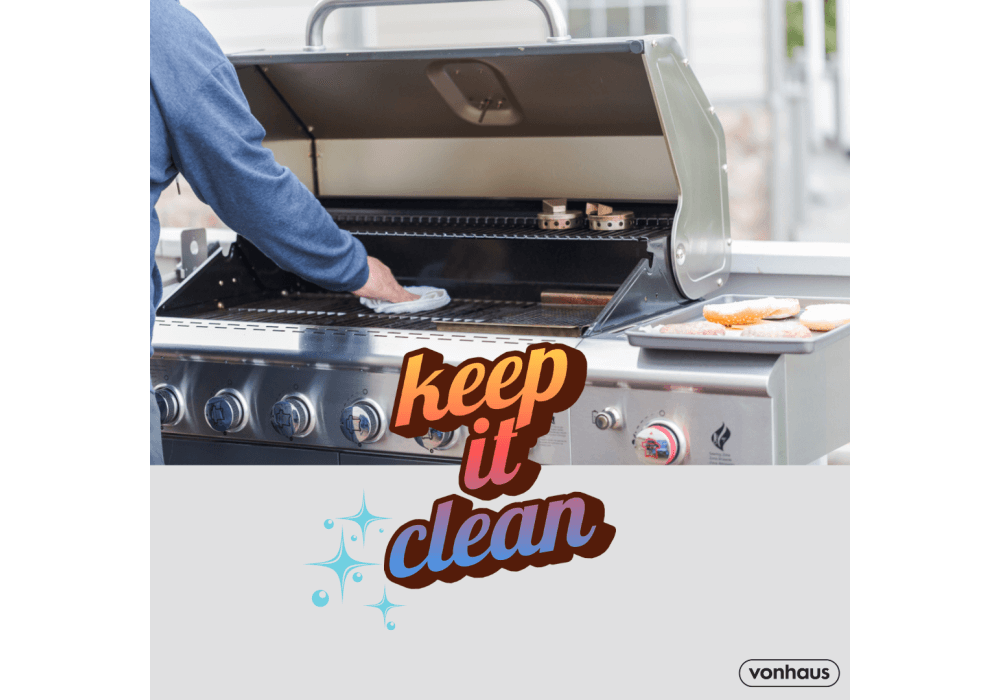
- Give it a thorough clean. Scrub the grates, wipe down the interior, and remove any grease from the cooking surfaces and body. Old grease and food residue are what cause rust, mould, and pest problems during storage – storing a dirty BBQ makes all of those significantly more likely. See our full BBQ cleaning guide for the detail.
- Dry everything completely. Moisture is the main cause of rust. Once cleaned, dry all surfaces with a cloth. If it’s a dry day, leaving it out in the air for an hour helps. Don’t put it away wet.
- Oil the grates and cooking surfaces. A thin coat of vegetable oil on the grates protects them from rust and keeps the seasoning in good shape over winter. Use a folded piece of kitchen paper to apply it evenly.
- Check for any damage while you have the chance. Inspect burners, hoses, seals, and grates for wear or damage. Winter is a good time to replace anything that needs it, so the BBQ is ready to use when warm weather returns rather than discovering a problem on the first cook of the season.
- Fit a weatherproof cover. A good-quality cover is the single most effective way to protect a BBQ during storage. It keeps rain, frost, dust, and wildlife off the surfaces. Our BBQ covers are fully waterproof and available in sizes to fit any BBQ, small through to large.
- Choose the right storage location. A garage or shed is ideal. If the BBQ stays outside, position it in the most sheltered spot available – against a wall, under an overhang, or on a sheltered patio.
Storing a gas BBQ for winter
Gas BBQs have a few additional steps because of the fuel system. These are important both for the longevity of the BBQ and for safety.
- Disconnect the gas bottle. Always disconnect the gas supply before storing. Detach the regulator to prevent any slow leaks during storage.
- Check the hose. With the gas disconnected, inspect the hose between the regulator and the BBQ for cracks, wear, or any signs of damage. A damaged hose should be replaced before the next use, not just noted and forgotten.
- Clean the burners. Remove food debris and blocked ports from the burner tubes with a wire brush or toothpick. Blocked ports cause uneven heat and ignition problems. Wrap the burners loosely in a cloth to deter insects from nesting in the tubes during storage.
- Clean and protect the heat plates and grates. Wash, dry, and oil all cooking surfaces. Line the drip tray with fresh foil before storing so it’s ready for next season.
- Store the gas bottle separately outside. This is a safety requirement, not a preference. Gas bottles must never be stored indoors, in a garage, or in a shed. A leak in an enclosed space – even a well-ventilated one – can allow gas to accumulate to dangerous levels. Store the bottle upright, on a flat surface, outside and away from windows, doors, and any ignition source.
|
Safety note Gas bottles must be stored outside – never in a garage, shed, or any enclosed space. If a bottle were to develop a slow leak indoors, gas can accumulate to dangerous levels without any obvious sign. Store the bottle upright on a flat surface, away from windows, doors, and ignition sources. Disconnect the regulator during storage. |
Storing a charcoal BBQ for winter
Charcoal BBQs are easier to store than gas, but ash and carbon residue need dealing with properly; both cause corrosion if left over a damp winter.
- Remove all charcoal and ash. Leftover charcoal absorbs moisture and accelerates rust from the inside out. Empty the ash catcher and the firebox completely.
- Clean the grates and interior. Scrub the grates with a wire brush, clean the inside of the cook box and lid, and remove any carbon deposits. Wipe down with a damp cloth and dry thoroughly.
- Oil the grates. A light coat of vegetable oil protects against rust during storage.
- Store leftover charcoal separately, indoors. Charcoal stored in a damp shed over winter absorbs moisture and becomes difficult or impossible to light. Keep it in a sealed metal container in a dry indoor space.
- Cover and position the BBQ. Fit a waterproof cover and store the BBQ in a garage or shed if possible. If it lives stay outside, choose a sheltered position.
Where to store a BBQ in winter
Location makes a significant difference. Here’s how the main options compare:
|
Location |
Protection level |
Notes |
|
Garage or shed |
Best |
Dry, sheltered, away from weather. Ideal for the BBQ itself. Gas bottles must still be stored outside. |
|
Covered patio or under an overhang |
Good |
Needs a quality weatherproof cover. Works well in most UK winters. |
|
Outside, unsheltered |
Minimum |
Only with a heavy-duty cover. Higher rust risk. Avoid if possible. |
|
Inside the house |
Not suitable |
Not recommended for gas or charcoal BBQs due to fumes and residue. Fine for small electric tabletop grills. |
|
Vonhaus tip Wherever you store the BBQ, avoid placing it directly on the ground. Raise it on a pallet, bricks, or a mat to prevent moisture from rising into the base and legs. Even a few centimetres makes a meaningful difference over a damp winter. |
Can I leave my BBQ outside in winter?
Yes, with the right preparation. A BBQ left outside over winter without protection is very likely to rust and deteriorate. But a BBQ left outside with a proper weatherproof cover, positioned in a sheltered spot and raised off the ground, will come through winter in reasonable condition.
The key variables are cover quality and position. A cheap cover that lets in water is little better than nothing. A well-fitting, fully waterproof cover from a sheltered spot – under an overhang, against a wall – provides adequate protection for most British winters.
If you live somewhere with heavy snowfall or particularly exposed conditions, indoor storage is the safer option.
Preparing your BBQ for the new season
Before the first cook of the year, spend a few minutes checking everything is in order. A BBQ stored correctly should need very little work, but it’s worth going through these checks before lighting it.
Remove the cover and wipe down all surfaces.
- For gas BBQs: inspect the hose and regulator before reconnecting the gas bottle. If anything looks worn or damaged, replace it. Check the burner ports are clear.
- For charcoal BBQs: check the vents are unobstructed and the grates are in good condition.
- If the grates look dry or the seasoning has faded, apply a fresh coat of oil and run the BBQ on a medium heat for 20–30 minutes before cooking to re-season the surface.
- If any rust has appeared – usually surface spots on the grates – deal with it before cooking. See our guide to cleaning a rusty BBQ.
- Run the BBQ on a low heat for 10–15 minutes before the first cook of the season to burn off any dust, residue from storage, or lingering moisture.
Store it right, and it’ll be ready when you need it

A BBQ that’s cleaned, covered, and stored properly at the end of the season doesn’t need much work come spring. Twenty minutes now saves hours of scrubbing and the cost of replacement parts later.
If you need a cover, browse our BBQ cover range for weatherproof options in sizes to fit any BBQ, or head to the BBQ accessories collection for everything else you need for al fresco cooking.
BBQ Storage – Frequently Asked Questions
How do I store a BBQ outside in winter?
Clean the BBQ thoroughly and dry it completely before storing. Apply a thin coat of oil to all cooking surfaces. Fit a quality weatherproof cover that fits correctly – a cover that lets in water offers little protection. Position the BBQ in the most sheltered spot available: against a wall, under an overhang, or on a covered patio. Raise it slightly off the ground to prevent moisture from rising into the base. For gas BBQs, disconnect the gas bottle and store it separately outside.
Can I store a gas BBQ in a garage or shed?
The BBQ can be stored in a garage or shed but the gas bottle cannot. Gas bottles must always be stored outdoors, on a flat surface, away from windows, doors, and ignition sources. Even a small leak from a bottle stored in an enclosed space can allow gas to build to dangerous levels. Disconnect the propane regulator before storage.
Do I need to clean my BBQ before storing it for winter?
Yes, this is the most important step. Old grease and food residue left over winter attracts pests, develops mould, and bakes onto surfaces in a way that’s significantly harder to remove than fresh residue. A dirty BBQ is also more likely to rust because the residue holds moisture against the metal. Clean before storing, and the BBQ will be in much better condition when you come to use it again.
Should I store my BBQ cover indoors or leave it on?
Leave the cover on the BBQ during storage. Even in a garage or shed, a cover protects against dust, cobwebs, and any pests that might take up residence over winter. If you’re storing the BBQ indoors and won’t be using the cover, keep it somewhere it won’t get damp.
Where should I store charcoal over winter?
Indoors, in a sealed container. Charcoal left in a damp shed absorbs moisture over winter and becomes very difficult to light. A sealed metal bin in a dry indoor space is ideal. Don’t leave charcoal in the BBQ during storage, as it holds moisture and accelerates corrosion of the firebox.
How do I stop my BBQ from rusting over winter?
Three things prevent rust: cleaning off residue that holds moisture against the metal, oiling all cooking surfaces to create a protective barrier, and fitting a weatherproof cover. Storing the BBQ off the ground also helps by preventing moisture from rising through the base. If rust does appear in spring, it’s usually surface-level and straightforward to remove – see our guide to cleaning a rusty BBQ.
Can I use my BBQ in winter?
Yes. A BBQ stored properly is still accessible and ready to use during winter. Winter BBQs are increasingly popular, and the colder air actually helps with temperature management on a charcoal grill. For tips on cold-weather cooking, see our guide to hosting a winter BBQ.