





 Need help?
How Much Does it Cost to Run an Oil-Filled Radiator?
Contents
- What is an oil-filled radiator?
- What is the cost to run an oil-filled radiator UK?
- What affects oil-filled radiator running costs?
- Running cost calculations (2026 energy prices)
- Are oil-filled radiators expensive to run?
- How oil-filled radiators compare to other heater types
- How to reduce the cost of running an oil-filled radiator
- Is an oil-filled radiator worth it?
- Oil-filled radiator FAQs
- Understanding the real cost to run an oil-filled radiator
The cost to run an oil-filled radiator UK homes rely on has become crucial as energy prices rise and people look for affordable, efficient ways to stay warm. An oil-filled electric radiator is one of the most dependable plug-in heaters available – steady, gentle warmth, low maintenance, and excellent heat retention – but running costs vary depending on wattage, room size, insulation and daily usage.
In this guide, we explain how an efficient oil filled radiator works, how much it costs to run at different power outputs, how to reduce your energy spend, and how it compares to other types of electric heaters. Whether you’re choosing your first electric oil filled radiator or trying to lower the oil radiator cost this winter, this evidence-based guide gives you clear, UK-specific answers you can rely on.
What Is an Oil-Filled Radiator?

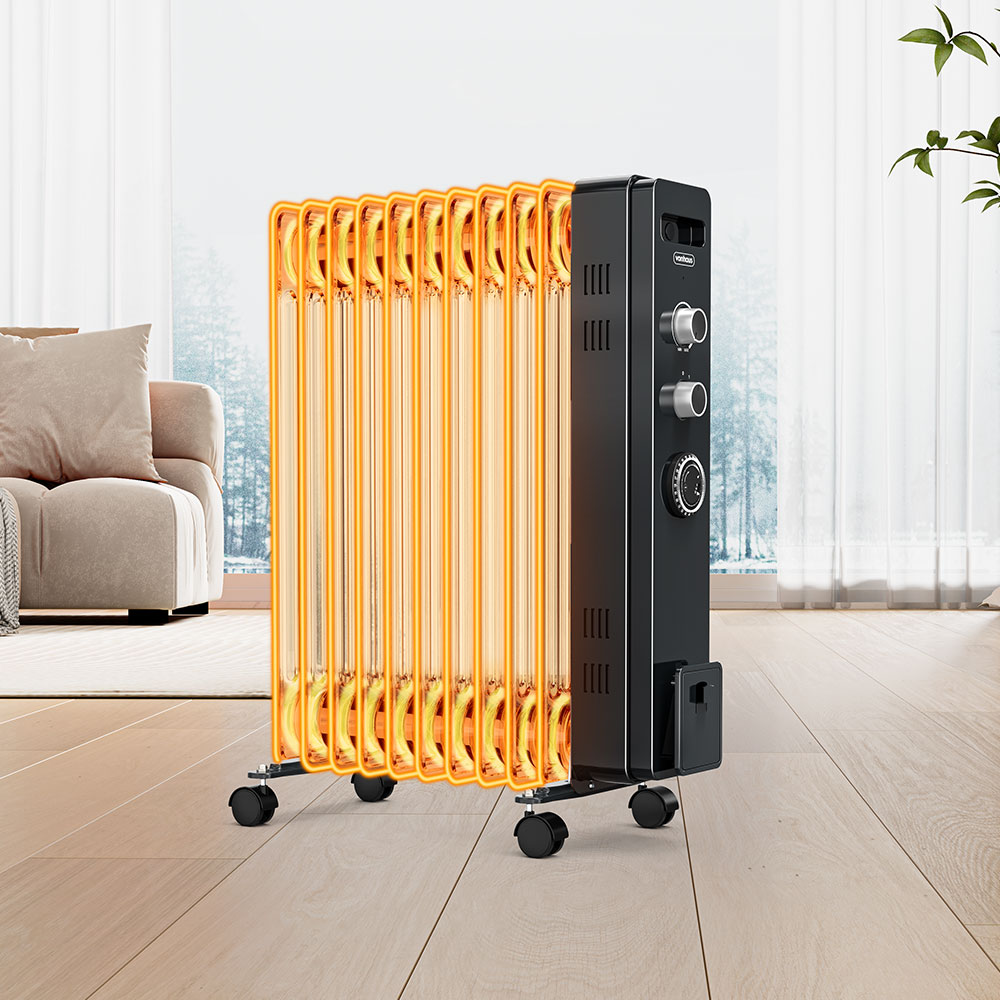
An oil-filled electric radiator is a plug-in heater that warms thermal oil sealed inside its fins. Electricity heats the oil, and the fins radiate steady, comfortable warmth into the room.
Why homeowners like them:
- Heat stays in the oil even after switch-off, reducing energy use
- No fan noise
- Safe, stable warmth
- Low maintenance
- Suitable for bedrooms, lounges, and home offices
For an in-depth technical breakdown, see our guide:
What Is the Cost to Run an Oil-Filled Radiator UK?
Before calculating, here are the current (Jan–Mar 2026) Ofgem energy prices:
- 27.69p per kWh
- 54.75p daily standing charge
Your electricity rate is the biggest driver of the oil radiator cost – followed by heater wattage, room size, insulation quality, and daily runtime.
Below, we calculate daily, weekly, and monthly costs using real-world usage patterns.
What Affects Oil-Filled Radiator Running Costs?
1. Wattage
Higher wattage = faster warm-up + higher running cost.
Typical oil heater sizes:
| Oil Radiator size | Wattage | Room size |
| Small | Up to 600W | Ideal for small rooms or spaces. |
| Medium | 600W - 1500W | Perfect for medium-sized rooms. |
| Large | 1500W - 2000W | Great for larger living areas. |
| Extra Large | 2000W+ | Best for open-plan spaces or large rooms. |
Understanding wattage helps you avoid overspending. For more detail, see:
2. Room Size & Insulation
A heater works most efficiently when its wattage matches the room size. Poor insulation forces any plug-in oil radiator to work harder, increasing energy use.
3. Usage Time
Running a heater for 2–4 hours a day is typical for evening use. All cost calculations below use 4 hours/day for accuracy.
4. Electricity Rates
Because rates change quarterly, always check your provider. This guide uses the current Ofgem price cap (Jan–Mar 2026).
Running Cost Calculations (2026 Energy Prices)
Small room
| Oil Radiator Wattage | 600W |
| Usage | 4 hours/day |
| Energy Consumption (600W * 4 hours) | 2.4kWh/day |
| Electricity Cost (2.4 kwH * 27.69p/kWh) | 66p/day |
| Total Daily Cost (66p + 54.75p) | Approx. £1.21/day |
Medium room
| Oil Radiator Wattage | 1500W |
| Usage | 4 hours/day |
| Energy Consumption (1500W * 4 hours) | 6kWh/day |
| Electricity Cost (6 kWh * 27.69p/kWh) | £1.66/day |
| Total Daily Cost (£1.66 + 54.75p) | Approx. £2.21/day |
Large room
| Oil Radiator Wattage | 2000W |
| Usage | 4 hours/day |
| Energy Consumption (2000W * 4 hours) | 8 kWh/day |
|
Electricity Cost (8 kWh * 27.69p/kWh) |
£2.22/day |
| Total Daily Cost (£2.22 + 54.75p) | Approx. £2.77/day |
Oil-Filled Radiator Running Cost Summary (2026)
Daily Costs
| Room Size | Radiator Wattage (W) | Energy Consumption (kWh/day) | Electricity Cost (p/day) | Total Daily Cost (£/day) |
| Small | 600 | 2.4 | 66.00p | £1.21 |
| Medium | 1500 | 6 | £1.66 | £2.22 |
| Large | 2000 | 8 | £2.22 | £2.77 |
Weekly and Monthly Costs
| Room Size | Total Daily Cost (£/day) | Weekly Cost (7 days) | Monthly Cost (30 days) |
| Small | £1.21 | £8.47 | £36.3 |
| Medium | £2.22 | £15.54 | £66.6 |
| Large | £2.77 | £19.39 | £83.1 |
Are Oil-Filled Radiators Expensive to Run?

Not necessarily. Because of their heat-retention ability, many homeowners find that an efficient oil-filled radiator uses less electricity than expected, especially compared with fan heaters or convection heaters.
To compare oil radiators with other heater types, see:
How Oil-Filled Radiators Compare to Other Heater Types
|
Heater Type |
Running Cost |
Noise Level |
Best Use |
|
Oil-Filled Radiator |
Low-medium |
Silent |
Bedrooms, lounges |
|
Fan Heater |
Medium-high |
Audible (low hum) |
Quick heat bursts |
|
Electric Stove Heater |
Medium |
Quiet |
Targeted heating |
|
PTC/Ceramic |
Medium |
Quiet |
Ambient heat |
How to Reduce the Cost of Running an Oil-Filled Radiator
Even the most efficient oil filled radiator can cost more than necessary if the surrounding environment loses heat quickly. Here’s how to reduce your daily oil filled radiator cost while keeping your home warm:
1. Use the Thermostat Properly (Key Money Saver)
Many people turn their plug-in oil radiator on full power until the room feels warm, then switch it off. This creates temperature spikes that waste energy. Instead:
- Set the thermostat to maintain a steady temperature.
- Once the oil heats, the radiator cycles on/off to maintain warmth, consuming far less electricity.
- Aim for 18–20°C in living spaces and 16–18°C in bedrooms to balance warmth and cost.
Why this works
Oil retains heat, so your heater continues radiating warmth even when off. Maintaining a stable temperature reduces the cost of oil filled radiator usage dramatically.
2. Improve Room Insulation for Instant Efficiency Gains
Your oil heater shouldn’t fight a losing battle against cold draughts. Improving insulation ensures that the warmth from your oil filled electric radiator stays in the room longer.
- Practical, low-cost insulation upgrades include:
- Thermal curtains to reduce heat loss around windows
- Draught excluders under doors
- Sealing gaps in flooring and skirting
- Adding rugs to colder floors
- Closing unused rooms to prevent heat migration
Good insulation means the radiator runs fewer heating cycles, lowering energy consumption.
For more tips to stay cosy and warm, see:
3. Position Your Oil Radiator Correctly
Placement affects efficiency more than you might expect. For optimal performance:
- Keep it away from curtains, which block heat
- Avoid placing it behind furniture
- Position the heater central to the room where airflow is unobstructed
- Ensure at least 30cm clearance on all sides
This allows warm air to circulate naturally, helping the room reach temperature faster and reducing wattage use.
Find the perfect spot for your oil-filled radiator in this guide:
4. Use Timers and Smart Plugs for Controlled Heating
A plug in oil radiator paired with a timer or smart plug allows you to automate usage:
- Warm the room before you wake up
- Heat only when you’re home
- Set schedules that prevent accidental all-day running
A few well-timed heating windows each day keeps rooms comfortable with minimal energy consumption.
5. Keep Your Oil Radiator Clean and Well-Maintained
Dust buildup prevents heat transfer and forces electric heaters to work harder. Maintenance includes:
- Wiping the fins monthly
- Checking the cable and plug for damage
- Ensuring the heater is upright before use
- Avoiding storage in damp areas (protects internal components)
Well-maintained electric oil filled radiators run more efficiently and last longer. Learn more about heater maintenance in our guide:
6. Choose the Correct Wattage for Your Space
Oversized radiators waste energy; undersized radiators run constantly. Here’s how to choose the correct heater for your space:
- 600–800W: small rooms & home offices
- 1000–1500W: medium lounges & bedrooms
- 2000–2500W: larger or open-plan spaces
For more help choosing, see our guide:
Is an Oil-Filled Radiator Worth It?
For most homes, yes – especially when the priority is:
- Affordable zone heating
- Quiet operation
- Steady warmth
- Low maintenance
- Safe overnight use
Compared with alternatives, the oil filled radiator cost sits comfortably in the mid-range while offering some of the best long-term efficiency.
Browse the full range:
Oil-Filled Radiator FAQs
Are oil-filled radiators expensive to run?
Oil heater running costs vary based on wattage, usage hours, insulation, and energy prices. In the UK, the average cost to run an oil-filled radiator ranges from £1.20–£3 per day for 4 hours of use, depending on size. Their slow-cooling oil core means you get residual heat even when switched off, making them cheaper to run than many fan heaters.
Are oil-filled radiators energy efficient?
Yes. An efficient oil-filled radiator provides slow, steady warmth and retains heat well due to the thermal oil inside. This means fewer heating cycles and lower electricity usage compared with heaters that rely on constant airflow.
How long does an oil-filled radiator take to heat a room?
Oil-filled radiators typically take 15–25 minutes to heat a room depending on wattage and room size. Although slower to heat initially, oil-filled heaters excel at maintaining a comfortable baseline temperature without constant electricity draw.
What size oil-filled radiator do I need?
- Up to 10m²: 600–800W
- 10–20m²: 1000–1500W
- 20–30m²: 2000W+
Correct wattage reduces your oil radiator cost by preventing unnecessary power usage.
Can I leave an oil-filled radiator on overnight?
Yes, provided the oil heater has built-in safety features such as overheat protection and a tip-over switch. Vonhaus models include these as standard. For bedrooms, choose a lower-wattage model for quieter, more comfortable heat.
Are oil-filled radiators safe?
Oil heaters don’t burn fuel or emit fumes, and the surface temperature is lower than many portable heaters. Because of their stability and slow heat production, they are one of the safest plug-in heating options available.
Learn more about oil heater safety in our guide:
Do oil-filled radiators use electricity when not heating?
Once the oil reaches temperature, the heating element switches off while the radiator continues to emit heat. This is the core advantage of oil filled electric radiators: extended warmth with reduced electricity usage.
Understanding the Real Cost to Run an Oil-Filled Radiator
Understanding the real cost to run an oil-filled radiator UK puts you back in control. Once you know how wattage, room size and insulation affect your oil-filled radiator running cost, it becomes far easier to heat your home efficiently and avoid paying more than you need to.
The good news is that oil filled electric radiators deliver steady, economical heat, making them one of the most reliable ways to warm a room without overspending. Whether you're choosing a compact oil-filled radiator for a small space or a larger, efficient oil filled radiator for everyday use, the numbers help you pick the right heater with confidence.
If you're ready to compare options or check real running costs, browse the full Vonhaus range below.