







 Need help?
The Complete Guide to Cast Iron Cookware
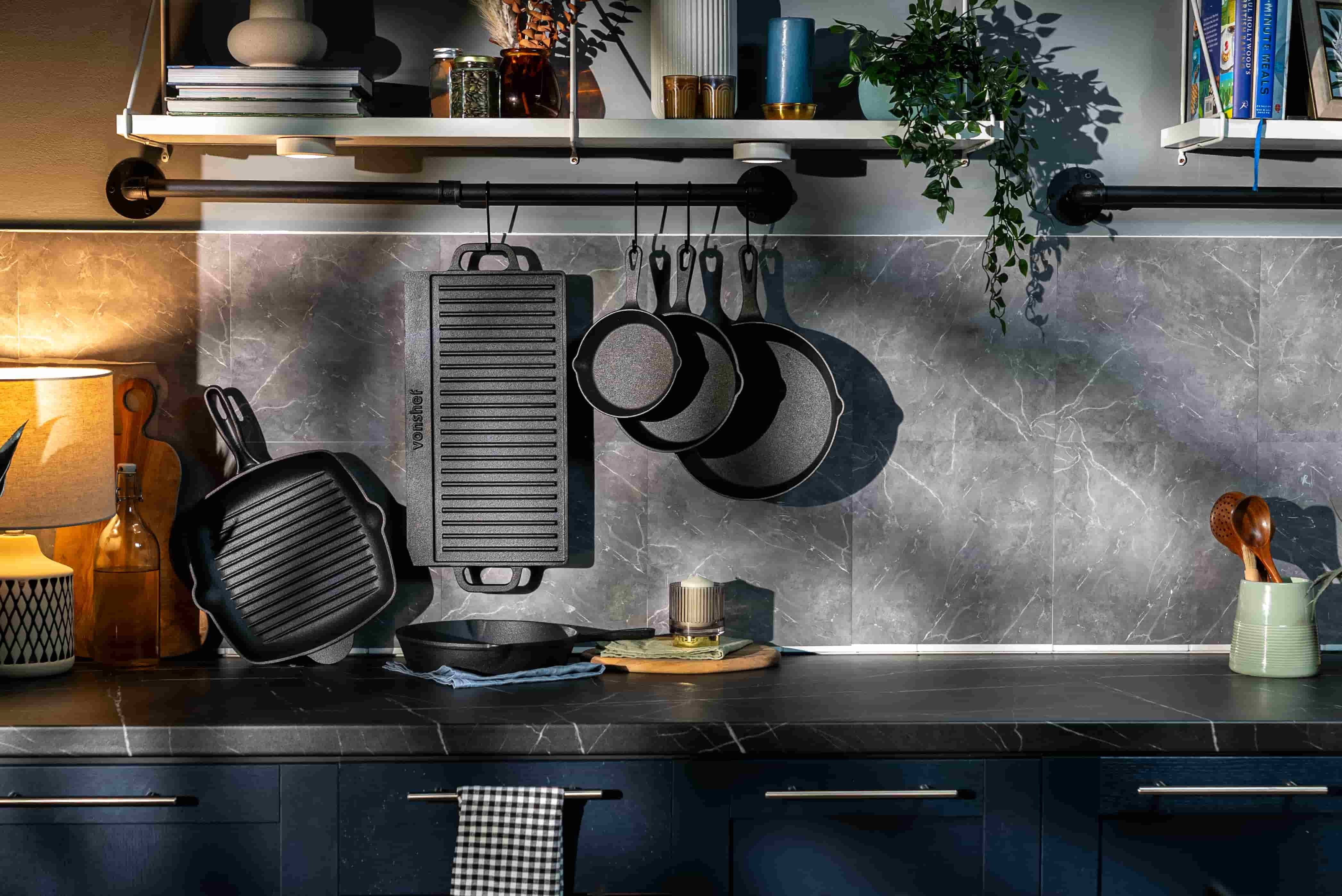
Contents
- What is cast iron cookware, and why does it matter?
- What is cast iron best used for?
- Cast iron vs non-stick: which should you choose?
- Is cast iron compatible with induction hobs?
- How to season a cast iron pan
- How to clean a cast iron pan
- Common cast iron mistakes, and how to fix them
- Vonshef Cast Iron – Which Pan to Choose
- Cast Iron Cookware – FAQs
- Ready to cook?
Cast iron divides people. Some swear by it. Others find it heavy, fussy, or intimidating, particularly if they've heard the warnings about rust, seasoning, and never using soap. The reality is less dramatic. Cast iron is one of the most practical, durable, and cost-effective materials you can cook with. Once you understand a few basic principles, it takes care of itself.
This guide covers everything: what cast iron is good at, how to choose the right pan, how to season and care for it, common mistakes, and which Vonshef pans are worth looking at. Whether you're buying your first piece or just want to get more from one you already own, you're in the right place.
What Is Cast Iron Cookware, and Why Does It Matter?
Cast iron is made by pouring molten iron into a mould, a process that's been used for centuries. The result is an extremely dense, thick-walled pan with properties that most modern materials can't match.
The key one is heat retention. Cast iron absorbs heat slowly but holds it evenly and for a long time. That's why it excels at tasks where consistent, sustained heat matters: searing steak, frying chicken, making cornbread in the oven, or keeping a fondue warm at the table. It also distributes heat evenly, which means fewer hot spots and more consistent results.
The trade-off is weight and warm-up time. Cast iron is heavy – noticeably heavier than stainless steel or aluminium – and it takes longer to come up to temperature. But most cooks find these things stop being an issue quickly, and the results speak for themselves.
What Is Cast Iron Best Used For?
Cast iron isn't the right tool for every job, but where it excels, nothing else really compares.
Searing meat
This is cast iron's signature move. To get a proper crust on a steak or chop, you need a pan that can get very hot and stay hot when cold protein hits the surface. Thinner pans cool down dramatically at the point of contact; cast iron barely flinches. The result is deeper colour, better flavour, and the kind of crust you'd expect from a restaurant kitchen.
Stovetop-to-oven cooking
Brown something on the hob, finish it in the oven – all in the same pan. No transfer or extra washing up. This is particularly useful for thicker cuts of meat, whole chicken pieces, frittatas, and anything that benefits from finishing heat from above as well as below. Cast iron handles oven temperatures that would destroy most other pans.
Grilling and griddle cooking
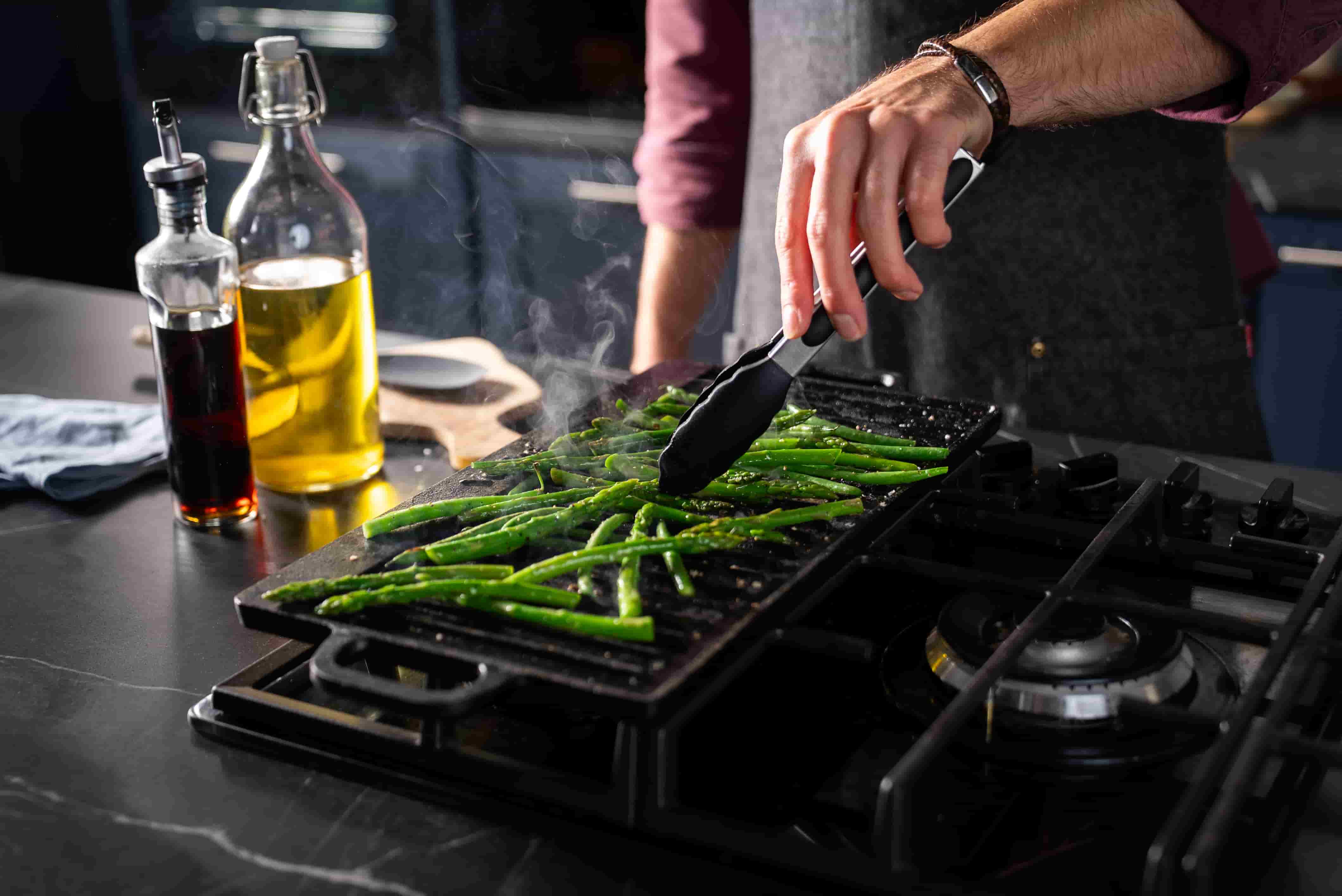
A ridged cast iron griddle pan recreates the effect of a barbecue on your hob. The raised ridges hold the food clear of the fat, let air circulate, and create the grill marks and slightly charred flavour associated with outdoor cooking. It works year-round, regardless of weather.
Slow and low cooking
Cast iron pots and casserole dishes are ideal for braises, stews, and slow-cooked dishes. They hold heat steadily for hours, distribute it evenly so the bottom doesn't scorch, and go from hob to oven and back again without complaint.
Baking
Less obvious, but cast iron is excellent for baking. Cornbread, focaccia, cobblers, skillet cookies – the even heat distribution and natural non-stick surface produce results that are hard to achieve in standard bakeware. A preheated cast iron pan also gives bread and pizza bases a crispier bottom crust.
Cast Iron vs Non-Stick: Which Should You Choose?
The honest answer is: ideally, both. They do different things well. But if you're choosing between them, here's how they compare:
|
Cast Iron |
Non-stick (PTFE) |
|
|
Heat tolerance |
Very high. Hob to high-heat oven, campfire, BBQ |
Limited. Typically 230–260°C max. No high-heat searing |
|
Non-stick performance |
Builds with use. Improves over years |
Excellent initially, degrades over time |
|
Durability |
Decades, with basic care. Essentially indestructible |
Surface scratches and wears. Replace every 3–5 years |
|
Weight |
Heavy. Can feel unwieldy for some |
Light. Easy to handle |
|
Cooking with fats |
Benefits from some fat, especially early on |
Minimal fat needed from day one |
|
Cleaning |
Hand wash only. No dishwasher |
Often dishwasher-safe (though hand washing extends life) |
|
Chemical safety |
100% natural surface. Iron and oil, nothing else |
Modern PTFE is considered safe at normal temperatures |
|
Costs over time |
High upfront, zero replacement cost |
Lower upfront, regular replacement adds up |
For eggs, pancakes, or quick sautés, a good non-stick pan is genuinely easier. For searing, oven cooking, or anything requiring high heat, cast iron wins. Many home cooks keep both.
Is Cast Iron Compatible with Induction Hobs?
Yes, cast iron is one of the best materials for induction cooking. Induction hobs work by generating a magnetic field that heats the pan directly, rather than heating a surface that then heats the pan. For this to work, the pan needs to be magnetic. Cast iron is highly magnetic.
In practice, this means all Vonshef cast iron pans – skillets, griddle pans, and the double-sided griddle – work on induction hobs as well as gas, electric, ceramic, and halogen. They also work on open barbecues and campfires.
One note: induction hobs can heat cast iron very efficiently, so preheat gradually and give the pan time to come up to temperature evenly before cooking.
How to Season a Cast Iron Pan
Seasoning is the process of baking a thin layer of oil into the surface of the cast iron to create a natural non-stick coating. With Vonshef cast iron cookware, this has already been done for you – the pans are pre-seasoned with vegetable oil before they leave the factory. But understanding how it works helps you maintain and build on it.
What seasoning is
When oil is heated to a high enough temperature, it polymerises, which means the molecules bond together and bond to the iron, forming a hard, smooth layer. Over time, layer upon layer of this builds up, and the surface becomes increasingly non-stick. The more you cook with fat, the better it gets. A pan that's been used regularly for years is significantly more non-stick than a brand-new one.
When to re-season
You'll know the seasoning needs attention when food starts sticking more than usual, or when the surface looks patchy or dull. This commonly happens after:
- Washing with harsh soap
- Prolonged cooking with acidic ingredients (tomatoes, wine, citrus)
- Leaving the pan wet or storing it in a damp place
How to re-season: step by step
- Preheat your oven to 200°C (fan) / 220°C (conventional).
- Wash the pan with warm water and a brush to remove any residue. Dry it completely – a few minutes on a warm hob works well.
- Apply a very thin, even coat of a neutral oil with a high smoke point: vegetable, flaxseed, or grapeseed oil all work well. Wipe away any excess, the layer should be barely visible.
- Place the pan upside-down in the oven (to prevent oil pooling) and bake for one hour.
- Turn off the oven and leave the pan to cool inside.
That's it. One seasoning cycle restores the surface; two or three builds it back up properly. The more you use the pan for cooking with fats and proteins, the less often you'll need to do this.
How to Clean a Cast Iron Pan
Cast iron cleaning is easier than its reputation suggests. The main rules are: avoid the dishwasher, dry it properly, and don't leave it wet.
After everyday cooking
- While the pan is still warm (not scalding), rinse with warm water and scrub with a stiff brush or a chainmail scrubber.
- For stuck-on bits: add a little coarse salt to the pan and use it as an abrasive with a folded cloth. This lifts residue without damaging the seasoning.
- A small amount of mild dish soap occasionally is fine – the 'never use soap' rule is an old one, dating to a time when soap contained lye. Modern dish soap won't ruin your seasoning in one wash, though regular use will strip it back over time.
- Dry immediately and thoroughly. The fastest method: put it back on a warm hob for a minute or two until all moisture has evaporated.
- Apply a thin wipe of cooking oil while the pan is still warm. This maintains the seasoning and protects the surface.
What to avoid
- The dishwasher – it strips seasoning and encourages rust.
- Soaking in water or leaving wet in the sink.
- Steel wool or harsh abrasives on a well-seasoned pan (reserve these for rust removal).
- Putting it away wet or storing in a damp cupboard.
Common Cast Iron Mistakes, and How to Fix Them
Not preheating long enough
Cast iron takes time to come up to temperature. Put it on a medium heat and give it two to three minutes before adding anything. Test by hovering your hand a few centimetres above the surface – you should feel significant heat. If food is sticking in a well-seasoned pan, insufficient preheat is usually the cause.
Turning the heat up too high, too fast
Cast iron retains heat so well that you rarely need as much heat as you'd use with a thinner pan. Medium to medium-high is usually sufficient for searing. Aggressive high heat from the start can cause uneven heating and, over time, warping. Start moderate and let the pan do the work.
Cooking acidic food and not re-seasoning after
Tomatoes, wine, vinegar, and citrus can all degrade seasoning if left in contact for a long time. The occasional tomato-based sauce is fine. A two-hour braise in wine will strip the seasoning back. It's not a disaster, just give the pan a re-season after.
Using too much oil
More oil doesn't equal better seasoning. A thin, even coat – so thin you can barely see it – polymerises properly. Too much oil creates a thick, sticky layer that doesn't cure properly and can turn rancid.
Panic about rust
A few rust spots are not the end of the pan. Scrub with steel wool, wash, dry thoroughly, and re-season. The pan will be perfectly usable. Rust prevention is about drying properly and oiling after washing, and once that's a habit, it rarely becomes an issue.
Vonshef Cast Iron – Which Pan to Choose
The Vonshef cast iron range is designed to cover the most common cooking needs without unnecessary complexity. All pans are pre-seasoned, induction-compatible, and come with a two-year warranty.
Vonshef Seasoned Cast Iron Skillet Pan
The everyday workhorse. The skillet is the most versatile piece in any cast iron collection – it sears, fries, sautés, bakes, and handles everything from a fried egg to a Sunday roast. Pre-seasoned, with dual pouring lips for draining fat. Available individually or as part of the three-piece set.
Best for: everyday cooking, searing, stovetop-to-oven dishes, eggs, bacon, chicken.
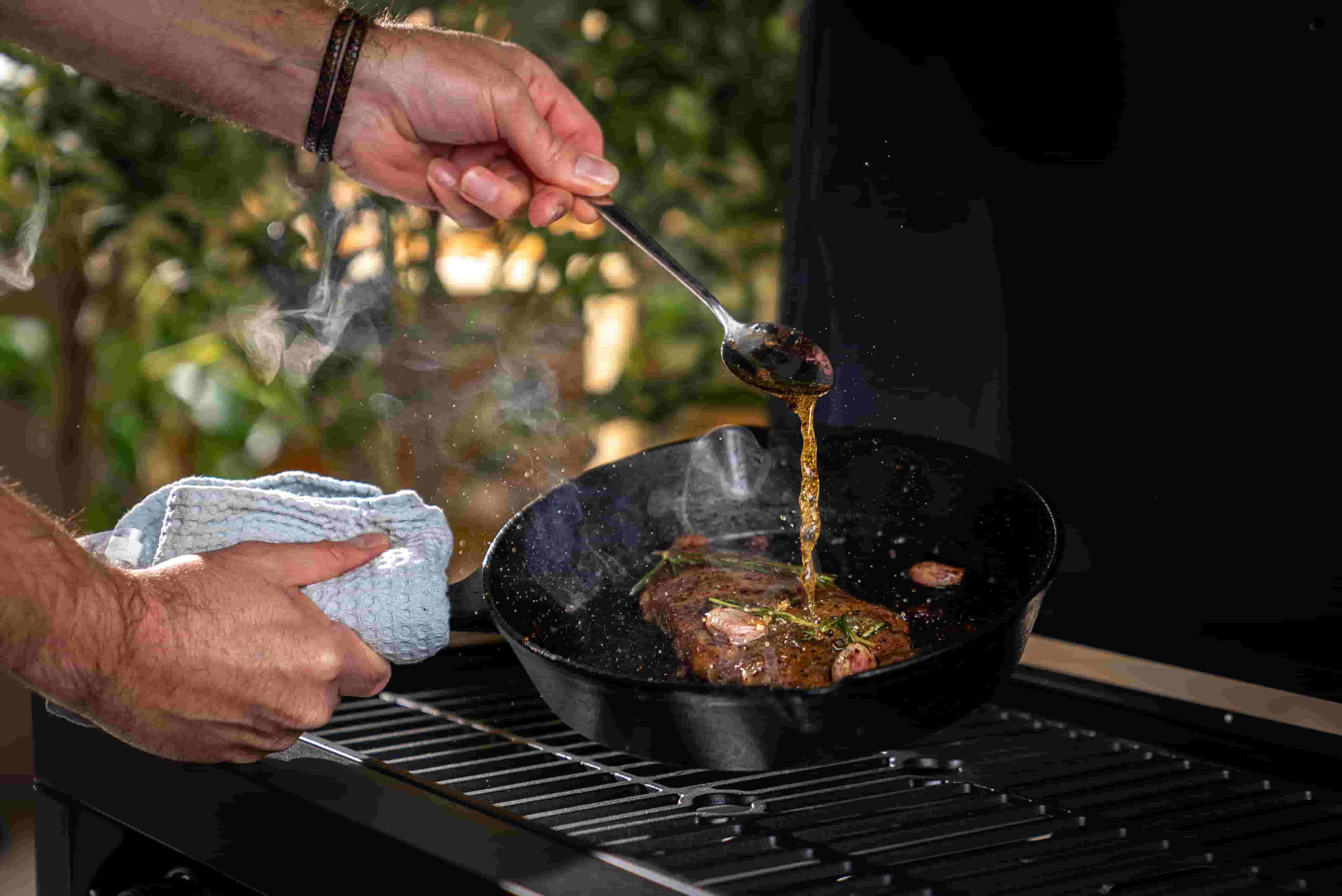
Vonshef 3-Piece Cast Iron Skillet Set (6", 8", 10")
Three sizes cover the full range of household cooking – the 6" is ideal for single portions or side dishes, the 8" handles most everyday cooking, and the 10" is large enough for family meals. All three are oven-safe up to 220°C and compatible with all hob types.
Best for: households that cook for varying numbers, or anyone setting up a cast iron kitchen from scratch.
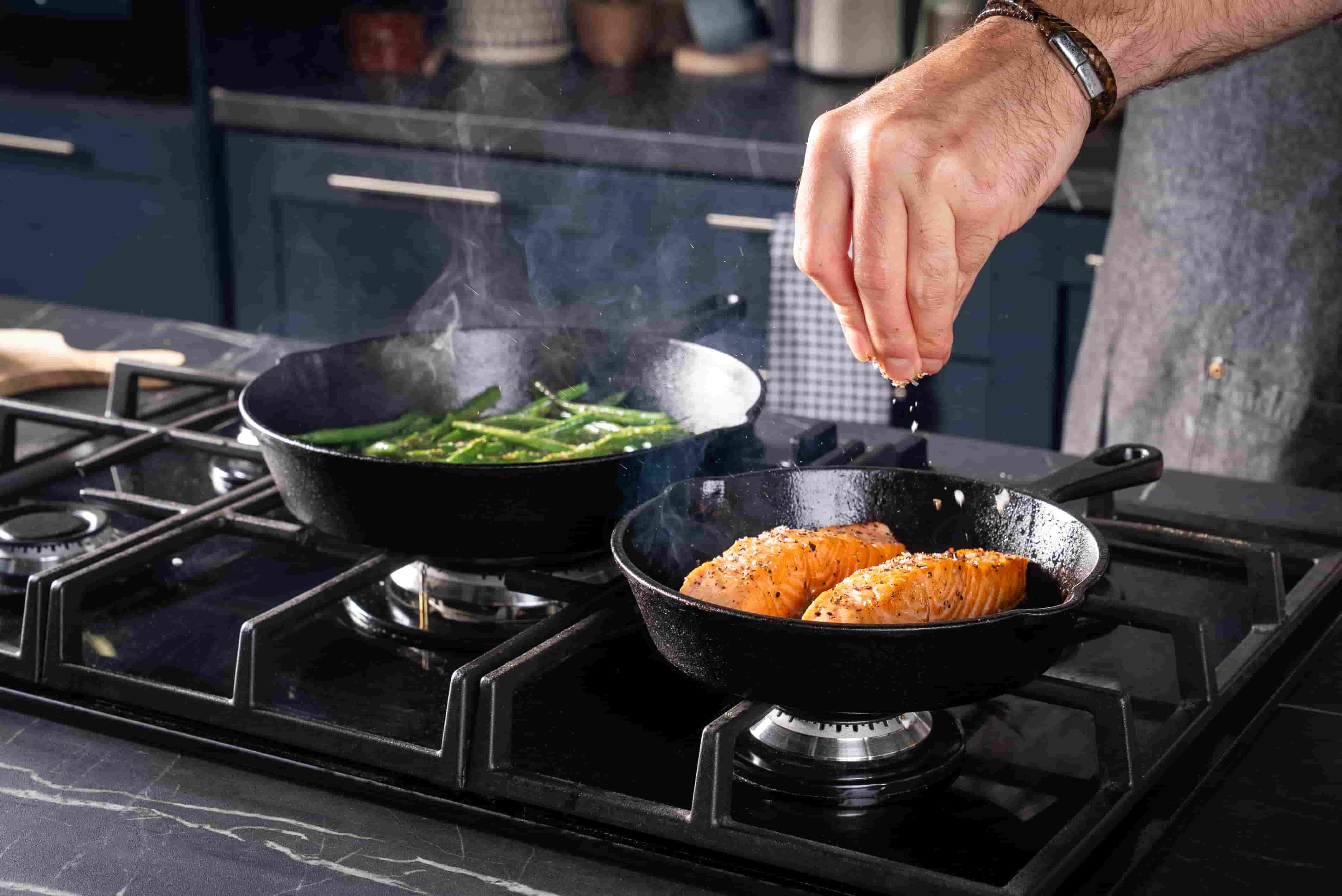
Vonshef Seasoned Cast Iron Griddle Pan
A square ridged pan that replicates grilling on the hob. The raised surface lifts food clear of the fat, creates classic grill marks, and gives a slightly charred flavour that a flat pan can't achieve. Pre-seasoned, oven-safe, and compatible with all hob types including induction.
Best for: steak, burgers, chicken breast, fish fillets, grilled vegetables, halloumi.
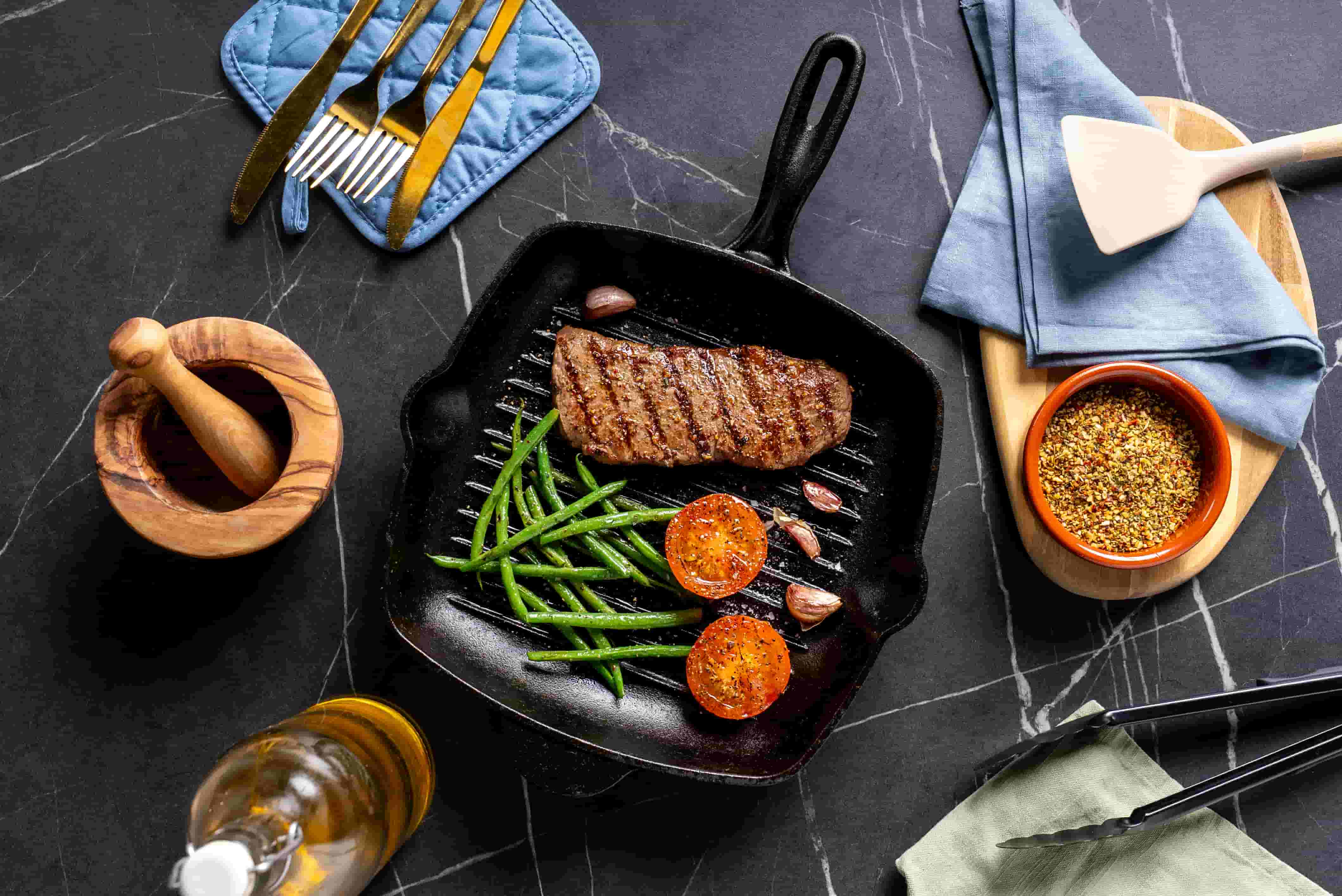
Vonshef 50cm Double-Sided Cast Iron Griddle
The larger, more versatile option. One side is smooth (pancakes, eggs, sandwiches), the other is ridged (meat, fish, grilled veg). The generous 50cm surface handles multiple items at once - useful for entertaining or cooking for a larger group. Works on hob, oven, barbecue, and open fire.
Best for: households that cook in volume, al fresco cooking, anyone who wants one pan that does everything a griddle should.
Cast Iron Cookware – FAQs
How do I know when my cast iron pan is properly seasoned?
A well-seasoned pan has a smooth, dark (usually black or very dark grey), slightly glossy surface. Food should release relatively easily, especially proteins and anything cooked with fat. If the surface looks patchy, dull, or orange-tinged, it needs attention.
Can I use metal utensils in a cast iron pan?
Yes. Unlike pans with synthetic non-stick coatings, cast iron is not damaged by metal utensils. Spatulas, tongs, and metal spoons are all fine. In fact, regular use of metal utensils helps smooth and build the seasoning over time.
Why is my cast iron sticky after seasoning?
This usually means too much oil was used during the seasoning process. A thick layer of oil doesn't polymerise properly; it stays tacky instead of hardening. Scrub the pan back, dry it, and re-season with a much thinner layer of oil so it’s barely visible after wiping.
How long does it take to build a good non-stick surface?
A pre-seasoned pan is ready to use immediately but improves noticeably over the first several cooks. Cooking bacon, sausages, or other fatty proteins is particularly good for building up seasoning. After a month of regular use, most people notice a significant improvement.
Can I cook acidic foods in cast iron?
Occasionally, yes. The issue is prolonged contact – a long tomato braise or wine sauce will gradually strip the seasoning. A tomato-based pasta sauce cooked for 20 minutes is unlikely to cause problems. For extended acidic cooking, an enamelled cast iron pot (where the iron is protected by enamel) is the better choice.
Is cast iron safe to cook with?
Yes. Cast iron is 100% natural – there are no synthetic coatings, chemicals, or additives. The only things on the surface are iron and the polymerised oil from seasoning. Small amounts of iron can transfer to food during cooking, which is harmless and, for some people, a genuine dietary benefit. It's among the safest cookware materials available.
What oil is best for seasoning cast iron?
Oils with a high smoke point and relatively low polyunsaturated fat content work best. Flaxseed oil is often cited as ideal because it polymerises quickly, but it can flake on older seasoning. Vegetable oil, grapeseed oil, and shortening are all reliable and widely used. Avoid olive oil; its low smoke point means it burns before it polymerises properly.
How do I remove rust from a cast iron pan?
Scrub the affected area with steel wool or a coarse scrubber until the rust is gone. Wash, dry thoroughly on a warm hob, then re-season. Surface rust is cosmetic and doesn't mean the pan is ruined. Deep, pitted rust on very neglected pans can be harder to resolve, but most rust you'll encounter on a moderately maintained pan is easily dealt with.
Ready to Cook?
The best way to learn cast iron is to use it. Start with the skillet – it's the most versatile piece – and cook a few things with a decent amount of fat to build up the seasoning. Within a few weeks, you'll wonder why you waited.