





 Need help?
Electric vs Petrol Lawnmowers: Which is Best?
Contents
- Start with the lawn, not the machine
- Electric lawnmowers: built for UK gardens
- Petrol lawnmowers: power with responsibility
- Lawn mower running costs: the long-term reality
- Corded vs cordless vs petrol mowers
- Environmental considerations (without the drama)
- Which Vonhaus lawn mower fits?
- So, electric or petrol?
Choosing between an electric and petrol lawnmower isn’t about picking the most powerful machine on paper. It’s about choosing the one that makes sense for your garden.
For many UK homeowners, that means electric: lighter, quieter, and easier to live with week after week. But if you’re cutting a larger lawn, dealing with uneven ground, or tackling grass that’s grown thick and stubborn, petrol still has a clear role to play.
The decision rarely comes down to power alone. It comes down to the size of your lawn, how it behaves through the seasons, and how much time you want to spend maintaining the mower itself.
Get those three things right, and the choice becomes straightforward. And by the end of this article, you'll know which mower is best for your garden.
Start With the Lawn, Not the Machine
It’s tempting to compare horsepower and battery voltage. But the smarter way to choose is to look at how your garden behaves across a season.
If your lawn takes 15–30 minutes to cut and you stay reasonably on top of it, electric will almost certainly do the job. Modern corded and cordless models offer more than enough power for regular domestic maintenance without the noise, fuel, or engine upkeep.
If your lawn runs beyond 40–45 minutes per session, includes uneven patches, or regularly gets long between cuts, that’s where petrol begins to justify itself. Not because electric is weak, but because endurance and torque matter more in those conditions.
The question isn’t ‘Which is stronger?’ It’s ‘What kind of mowing experience do I want?’
Electric Lawnmowers: Built for UK Gardens

Electric mowers, both corded and cordless, are designed around simplicity.
You wheel it out, press a button, mow, and pop it back in storage.
There’s no fuel to buy. No oil to change. No carburettor to winterise. For many households, that alone is reason enough.
They’re typically lighter than petrol mowers, easier to manoeuvre around beds and edges, and noticeably quieter. If you’ve ever tried to mow early on a Sunday with a petrol engine roaring, you’ll understand the appeal.
Corded electric models work well for compact and medium gardens where you have access to outdoor power. Cordless options remove the cable entirely and now offer runtime sufficient for most lawns, especially if you mow regularly rather than letting grass grow wild.
Battery technology has improved dramatically over the past few years. While cordless mowers still have a fixed runtime per charge, for typical UK lawns that window is often more than enough. And for larger areas, keeping a second battery charged is a straightforward solution.
Where electric occasionally struggles is in extremely long, wet, or dense grass. In those cases, you may need to slow your pace or take a second pass. But for maintained lawns cut weekly or fortnightly, the finish is clean and consistent.
Petrol Lawnmowers: Power With Responsibility
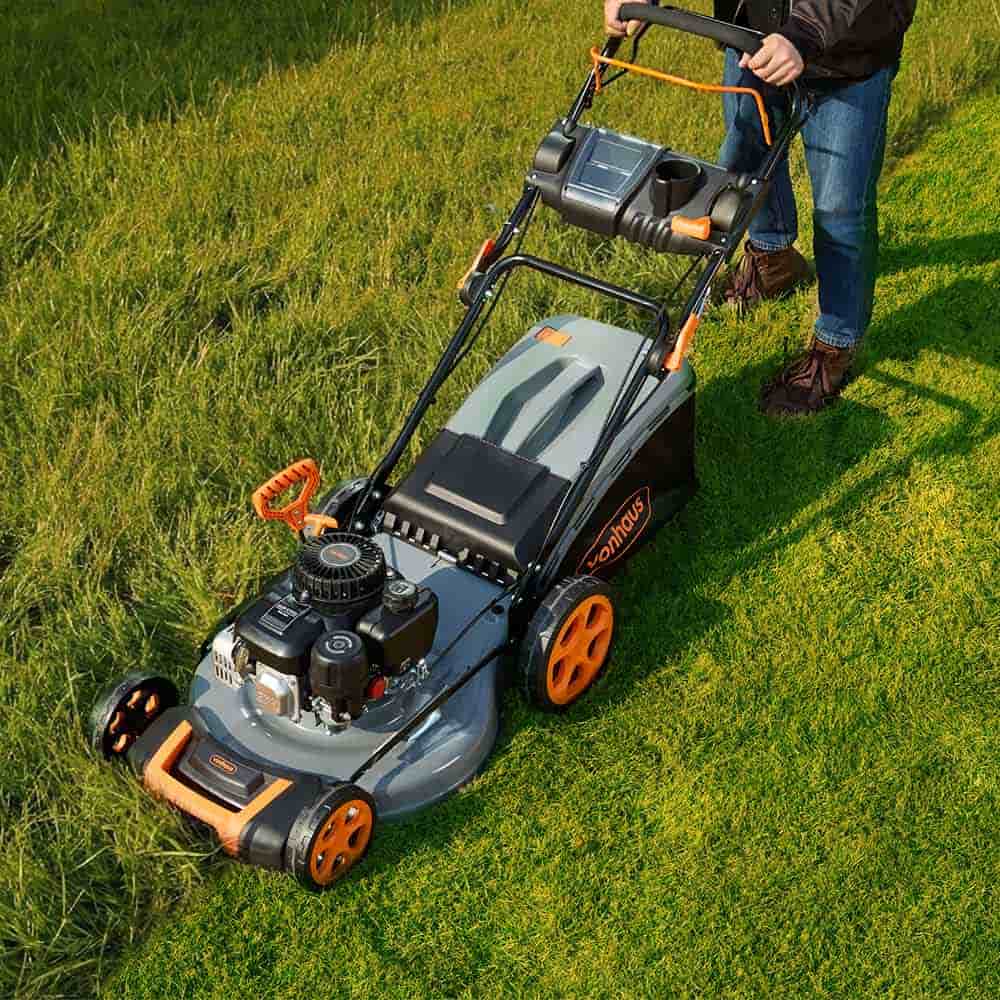
Petrol mowers still exist for a reason.
If you’re dealing with a large garden, uneven terrain, or thick grass that doesn’t get cut regularly, the torque of a combustion engine can make the job quicker and more forgiving. Petrol models also remove concerns about runtime, as long as there’s fuel in the tank, you keep going.
That freedom matters when mowing takes over an hour.
But petrol ownership comes with trade-offs. You’re responsible for fuel storage, oil checks, spark plugs, air filters, and seasonal maintenance. Engines don’t enjoy sitting unused for months, so winter storage needs attention. And they’re louder; significantly so.
For some gardeners, that mechanical involvement is part of the appeal. For others, it’s friction they’d rather avoid.
Petrol isn’t outdated. It’s just more specialised.
Lawn Mower Running Costs: The Long-Term Reality
Over several seasons, electric usually works out cheaper for the average domestic user.
Charging a battery or running a corded mower from the mains costs very little per session. Maintenance is limited to blade care and eventual battery replacement after years of use.
Petrol mowers incur ongoing fuel costs, plus engine consumables. The difference becomes more noticeable the more frequently you mow.
If your lawn is modest in size, electric often wins not just on convenience but on long-term cost.
Corded vs Cordless vs Petrol Mowers
Many buyers today aren’t choosing between two options, but three.
Corded electric is typically the most affordable upfront and offers unlimited runtime, as long as you’re comfortable managing a cable.
Cordless electric mowers offer freedom of movement and increasingly strong battery performance. For most small and medium gardens, it strikes a good balance between convenience and power.
Petrol delivers endurance and torque but demands more upkeep.
The right answer depends less on ‘which is best’ and more on ‘which suits how I live.’
Environmental Considerations (Without the Drama)
Electric mowers produce no direct exhaust emissions and operate more quietly. They also eliminate the need to store petrol at home.
Petrol mowers burn fuel and generate more noise, which may be a consideration if you live in a close residential area.
If reducing emissions and noise is important to you, electric aligns more naturally with that goal. But practicality should still lead the decision.
Which Vonhaus Lawn Mower Fits?
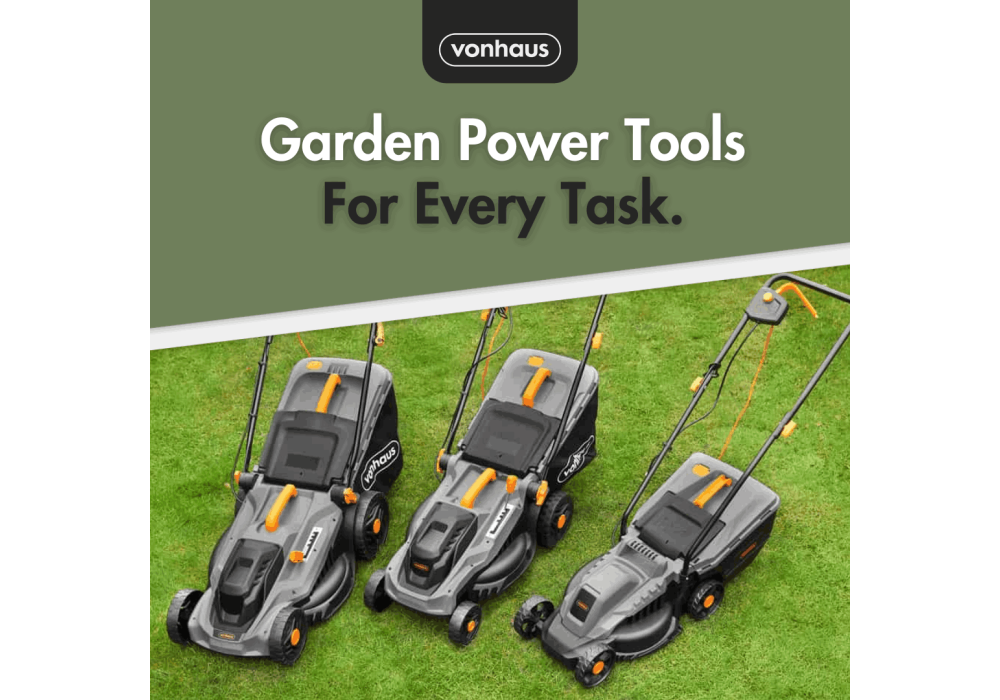
At Vonhaus, we design lawnmowers around typical UK gardens, not oversized estates or marketing fantasies.
Our range includes:
- Compact corded models for small lawns
- Mid-range electric mowers for regular suburban maintenance
- Cordless options offering freedom without fuel
- Petrol mowers for larger or tougher spaces
We focus on usable cutting widths, manageable weight, straightforward controls, and reliable performance, not unnecessary complexity.
And every model comes with:
- Free UK delivery
- A free 2-year warranty
- Access to our Lawncare Hub for ongoing guidance
The aim is simple: tools that work without demanding mechanical expertise.
So, Electric or Petrol?

For most gardens, electric lawnmowers offer the right balance of power, simplicity, and long-term value. They’re easy to start, easy to store, and easy to live with, which matters far more than headline specs.
But petrol mowers still have their place. Larger lawns, uneven ground, and longer sessions can justify the extra torque and endurance. But that capability comes with added upkeep, noise, and cost. It’s a trade-off worth making only when your garden genuinely demands it.
The best mower isn’t the loudest or the most powerful. It’s the one that fits your space, your routine, and the way you want to care for your lawn.
At Vonhaus, we design garden power tools for real UK gardens, not extremes. Whether you choose electric or petrol, the aim is the same: reliable performance, straightforward setup, and a mower that earns its place every weekend.
Because when the tool fits the job, mowing feels less like maintenance, and more like momentum.